In the cutthroat digital world of today, reaching your target audience, increasing brand recognition, and fostering steady business growth all depend on having a well-defined marketing plan. However, how can a successful marketing strategy be developed? We’ll walk you through every step of the process in this guide explaining how to create a marketing strategy, from identifying your target audience to tracking outcomes, so you can create a marketing plan that works.
What Is a Marketing Strategy?
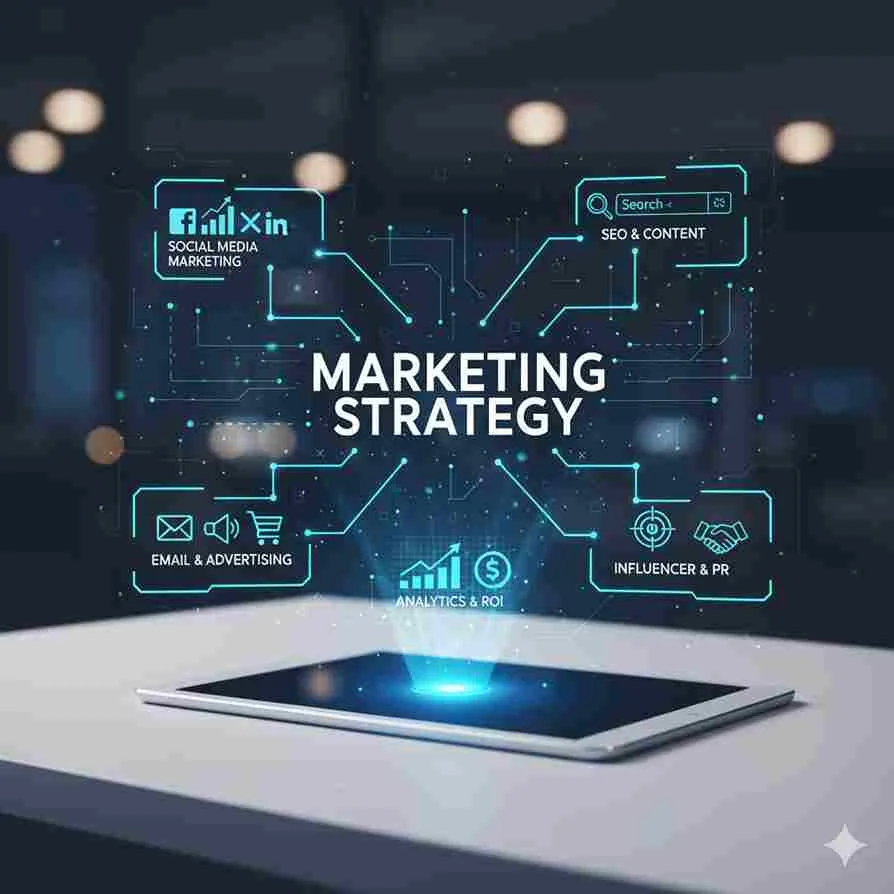
A marketing strategy is a long-term plan that outlines how your company will draw in and keep clients. It includes everything from determining your target market to selecting marketing platforms, establishing objectives, and monitoring results.
Simply put, your marketing plan provides answers to these important queries:
- Who are your ideal clients?
- What distinguishes your brand?
- Which advertising platforms are you going to employ?
- How are you going to gauge success?
1: Define Your Goals
Establishing precise, quantifiable, and achievable marketing objectives should come first. Your objectives will dictate the course of your strategy and the tactics you employ.
example
- In three months, increase website traffic by thirty percent.
- Create 100 fresh leads every month.
- Increase participation on social media by 50%.
- Increase the conversion rate from 2% to
2: Identify Your Target Audience
The people who are most likely to purchase from you should be the target of your marketing strategy. To determine who your target market is and learn how to create a marketing strategy, make buyer personas based on factors like age, gender, location, income, hobbies, and issues.
- Recognise their problems and the answers they seek.
- Look into the websites they frequent, such as YouTube, forums, and social media.
- For instance, entrepreneurs or small business owners looking to expand online may be your target market if you are offering digital marketing services.
3: Analyse Your Market and Competitors

Research the market trends and your competitors before making any plans. This aids in identifying opportunities and gaps.
Key things to analyse:
- Which marketing platforms do your rivals employ?
- What kinds of advertisements or content do well?
- What are their advantages and disadvantages? How are their marketing efforts being received by consumers?
Use tools like:
- Utilise resources such as Google Trends to find popular subjects.
- Ahrefs and SEMrush (for SEO and keyword research)
- Similar Web and Social Blade (to examine the social and traffic data of competitors)
4: Define Your Unique Selling Proposition (USP)
Your unique selling proposition is what distinguishes you from your competitors. It ought to make it clear why customers ought to choose you.
- What can I provide that others cannot?
- In what ways does my product or service increase client satisfaction?
- What makes my brand distinctive?
As an example, “Unlike other agencies, we prioritise data-driven, individualised marketing strategies that ensure quantifiable outcomes.”
5: Choose the Right Marketing Channels
Select the advertising channels that will best connect with your target audience. Focus on the platforms with the best return on investment rather than trying to be everywhere.
popular marketing channel
- Social media marketing: Increase interaction on Facebook, Instagram, LinkedIn, and other sites.
- Content marketing: To inform and draw in viewers, use blogs, videos, and infographics.
- Email marketing: Develop connections and nurture leads.
- PPC Advertising: For quicker results, run sponsored advertisements on social media or Google.
6: Plan Your Marketing Tactics
Choose particular strategies and campaign concepts after you’ve selected your channels. For instance, launch an SEO campaign aimed at long-tail keywords.
- To turn website visitors into leads, start an email series.
- To establish authority, conduct live webinars or Q&A sessions.
- Make contests or challenges on social media to increase participation.
- To maintain consistency, arrange your strategies in a content calendar.
7: Set Your Budget
Every marketing plan requires a well-defined budget. Distribute money according to your channels and goals.
Budget categories to consider:
- Advertising spend (Google Ads, Meta Ads, etc.)
- production of content (blogs, videos, and graphics)
- Software and tools (SEO, CRM, analytics)
- Team or independent contractor expenses
8: Measure and Optimize

Monitoring your performance is essential. To determine what is and is not working, use analytics tools.
Key marketing metrics to track:
- Engagement and traffic to websites
- Rate of conversion
- CPL, or cost per lead
- ROI (return on ad spend)
- Growth and engagement on social media
Optimization tips:
- Experiment with various headlines, images, and calls to action.
- Evaluate the effectiveness of the campaign every month.
- Put twice as much effort into content that performs well.
Your campaigns can be tracked and improved with the aid of tools like Google Analytics, HubSpot, and Meta Ads Manager.
Bonus: Tips for a Winning Marketing Strategy
- Prioritise content that adds value rather than merely advertising.
- Create an email list right away.
- Success in marketing takes time, so be consistent.
- Keep testing and learning from your data.
- Stay updated with the latest digital marketing tren
9: Build a Consistent Brand Message
Your content, tone, and images must all convey the same message
Checklist for Brand Consistency:
- Utilise the same colour scheme, typefaces, and logo for every channel.
- Keep your tone consistent, whether it be professional, amiable, or imaginative.
- Make use of branded templates for videos and posts.
- Make all content consistent with your USP.
As an example,
if you advertise that you are a “Digital Marketing Strategist in Thrissur,” highlight your local knowledge in your copy by saying things like “Aiding Thrissur businesses grow online through smart, data-driven marketing.”
Bonus: Expert Tips for a Winning Marketing Strategy
- Prioritise content that adds value rather than merely advertising.
- Create an email list right away.
- Don’t assume what works; test everything.
- Observe the most recent developments in digital trends.
- To emotionally engage your audience, use storytelling.
- Make your website mobile-friendly.
- Promote client endorsements and reviews
- Spend money on local SEO, particularly if you cater to a local audience.
10: Build Partnerships and Collaborations
Marketing does not occur in a vacuum. You can reach a wider audience by working with other regional or online brands.
tips:
- For reciprocal promotion, team up with Thrissur-based influencers, designers, or photographers.
- Organise workshops for local businesses or webinars.
- Engage in cross-promotion with businesses that complement each other, such as web developers and social media managers.
Pro Tip: Cooperation equals credibility + exposure. It enables you to naturally reach new audiences
11: Review, Learn & Evolve Constantly
Your marketing strategy should adapt to the rapid changes in the digital landscape.
steps:
- Every month, review KPIs and compare them to your objectives.
- Keep abreast of changes to the Google Algorithm, Meta Ads, and SEO.
- Gather audience or client feedback to improve your messaging.
- To learn from others, go to Thrissur business meetups or local marketing events.
Pro Tip: Long-term success is achieved through small, regular improvements, which is why the best marketers never stop optimising.
12: Focus on Customer Retention
It’s wonderful to get new clients, but it’s even better to keep existing ones. Long-term growth, referrals, and repeat business are all facilitated by strong customer relationships.
Tips:
- Give current customers access to special discounts or loyalty plans.
- After a campaign or purchase, send individualised follow-up emails.
- Gather endorsements and post them on your website and social media accounts.
- Use WhatsApp broadcasts or newsletters to stay in touch.
Pro Tip: Happy customers become your best marketers, and retention is less expensive than acquisition.
13: Integrate Offline & Online Marketing

Having an offline presence is still important, especially for local businesses in Thrissur, even in this digital-first world. For optimum impact, combine the two strategies.
ideas:
- Print flyers or banners that link to your website or Instagram should have QR codes.
- Support college festivals, expos, and local events.
- Make connections with small business owners and entrepreneurs in your area.
- Gather offline leads and follow up with them via social media or email campaigns.
Pro Tip: Creating a strong, dependable brand identity requires combining online visibility with offline credibility.
14: Strengthen Your Personal Brand
Individuals are more likely to connect with one another than with companies. Developing your personal brand gives your marketing initiatives more legitimacy.
tips:
- Post success stories and behind-the-scenes material on Instagram and LinkedIn.
- Give a speech at Thrissur workshops or local business events.
- Publish newsletters or articles that demonstrate thought leadership.
- Work together with influential people in your field.
- Display case studies and testimonials to demonstrate your expertise.
Pro Tip: Even before you see results, clients will trust your strategy if you have a strong personal brand
15: Strengthen Community Engagement in marketing strategy
One of the most effective long-term marketing techniques is creating a devoted following. When your audience feels engaged rather than sold to, your brand expands more quickly.
tips:
- Make a private online community for your clients on Facebook, Telegram, or WhatsApp.
- Distribute free materials, advice, or updates that are consistently useful.
- Promote user-generated content and highlight the achievements of your followers.
- Actively reply to reviews, messages, and comments.
- To keep in touch, host live sessions or Q&As once a month.
Pro Tip: Trust converts more quickly than any advertisement, and community builds trust.
16: Local and Global SEO Optimisation

Long-term visibility is increased by optimising for both local and global reach, even if your target audience is local (such as those in Thrissur or Kerala).
Action Points:
- Update your Google My Business reviews, keywords, and images to improve visibility.
- Make use of keywords such as “Digital Marketing Strategist in Thrissur” and local schema markup.
- Make landing pages that are specific to places like Kochi, Calicut, and Palakkad.
- Use general keywords like “SEO consultant” or “digital marketing freelancer” to expand internationally.
- Create backlinks from specialised websites as well as local directories.
Pro Tip: Careful localisation maintains the essence of your personal brand while increasing reach.
Final Expert Thought
marketing strategy These days, marketing is more than just advertising products; it’s about building strong relationships that inspire action and build trust.
Being a true marketing expert requires you to: Think more like a strategist than a marketer; Prioritise relationships and value overreach. Allow data to guide creativity rather than limiting it. Digital never stays the same, so always change. “Great marketing creates a lasting impression, builds community, and tells a story in addition to selling.”